Red Light Therapy at Home: How to Choose the Right Fringe Device
August 15, 2026
Experience the Magic of Besque: Premium Body Oils for Radiant, Youthful Skin
September 1, 2026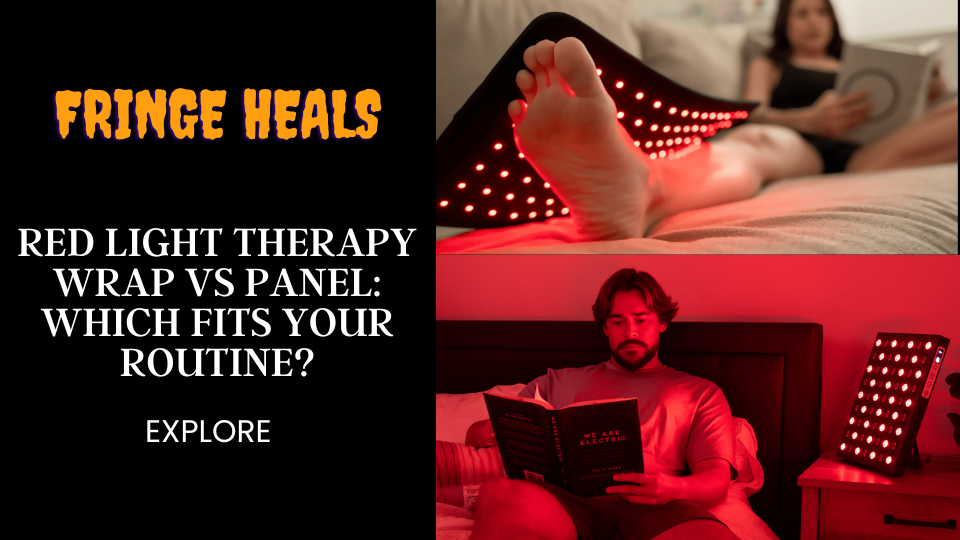
Choosing between a red light therapy wrap vs panel can be difficult when both options use similar light wavelengths but offer very different experiences. A wrap is designed to stay close to the body and provide targeted coverage, while a panel is positioned separately and can illuminate a larger area. The right format depends on where you want to use light therapy, how much coverage you need, and whether portability or broader exposure matters more to you. Fringe Heals offers both wireless wraps and a red light therapy panel, with several additional formats for specific areas. Understanding how these devices differ can make it easier to compare their features without assuming that one format is automatically right for everyone.
Red Light Therapy Wrap vs Panel: The Main Difference
The biggest difference is how the light reaches the body.
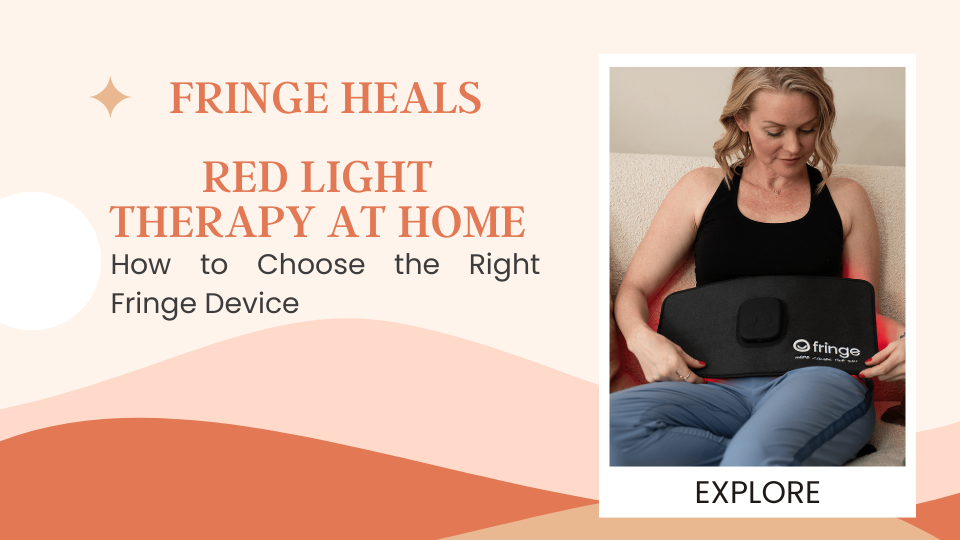
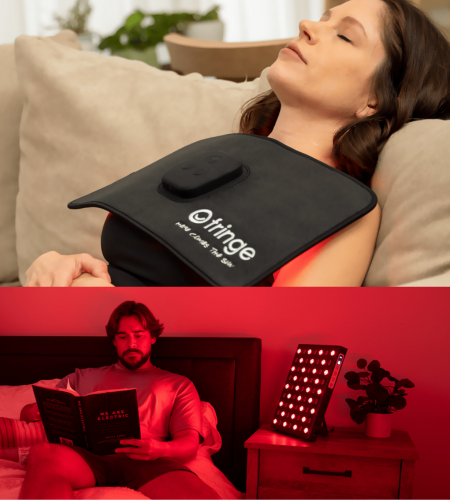
A red light therapy wrap is flexible and designed to sit directly against the body. Fringe’s standard wireless wrap uses 660nm red light and 850nm near-infrared light, includes 360 LED chips, adjustable brightness, and a built-in 20-minute timer. It is designed for areas including the knees, lower back, shoulders, and feet.
A panel works differently. Fringe’s panel uses 660nm red light and 850nm near-infrared light and is designed to be positioned away from the body. Its product specifications list three light modes, two brightness settings, and automatic timer options.
That distinction makes the two formats useful for different routines.
When a Red Light Therapy Wrap Makes Sense
Wraps are particularly practical when you want targeted, portable light therapy.
Because the wrap is flexible and wireless, it can be positioned around different parts of the body without requiring you to stand or sit directly in front of a stationary device. Fringe states that its regular wrap can be used across multiple body regions, while specialized joint wraps are shaped for areas such as the knee, ankle, elbow, hand, wrist, neck, and shoulder.
The standard wrap also has a 5,000mAh battery, with the manufacturer listing approximately three to four uses per charge.
A wrap may therefore suit someone who values:
- Targeted coverage
- Wireless operation
- Flexible positioning
- A compact device
- Routine use around specific body areas
When a Red Light Therapy Panel Makes Sense
A panel may be more appropriate when larger-area coverage and adjustable positioning are priorities.
Fringe’s panel is listed at 189W and contains 63 three-watt LED lights. It provides red and near-infrared modes separately as well as a combined mode. The product specifications recommend positioning it approximately 6–12 inches from the desired area.
The panel also offers 10-, 20-, and 60-minute timer settings and 50% or 100% brightness.
Unlike a wrap, a panel can also provide visible ambient red light to a space. Fringe specifically describes its panel as suitable for illuminating an area as well as providing direct light therapy.
Wavelengths Matter Too
When comparing red light therapy products, don’t look only at the device shape. Check the wavelengths.
Fringe’s regular wraps and panel use 660nm red light and 850nm near-infrared light. The company’s face mask uses a different combination: 630nm red, 830nm near-infrared, and 415nm blue light. Its head wrap also uses a different wavelength combination.
This means products shouldn’t be treated as interchangeable simply because they are all described as light therapy devices.
Other Fringe Options to Consider
If neither a standard wrap nor panel matches your intended routine, Fringe offers several additional formats.
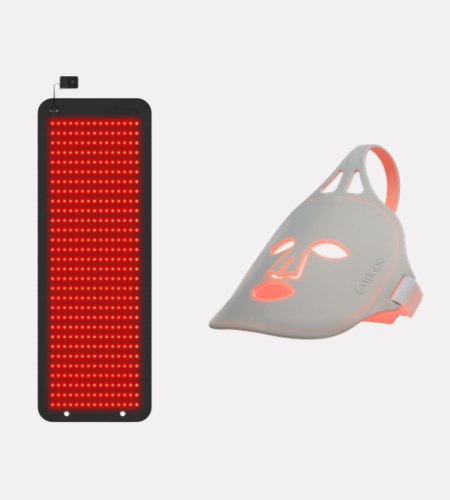
The Red Light Therapy Mat provides 660nm red light and 850nm near-infrared light across a 68-by-24-inch surface. It includes adjustable brightness and 15- or 30-minute session settings, and can operate with a rechargeable power bank.
For facial routines, the Red Light Therapy Face Mask uses 630nm red, 830nm near-infrared, and 415nm blue light, with three modes and a built-in 10-minute timer.
Fringe’s current light-therapy collection also includes an extra-long wrap, head wrap, abdominal belt, clinical pad, joint wraps, neck and chest mask, and light therapy wand.
Pricing and Practical Considerations
Current Fringe listings show that prices vary considerably by device. The standard wrap is listed at $229, the panel at $450, and the full-body mat at $749 on the individual product pages currently indexed. Prices can change, so checking the official product page before purchasing is important.
When comparing options, consider more than the initial price:
- Intended treatment area
- Device size
- Portability
- Wavelength combination
- Timer controls
- Brightness adjustment
- Battery operation
- Warranty terms
Fringe lists a one-year limited warranty on the standard wrap, panel, and mat.
Pros and Cons
Wrap pros
- Portable and wireless
- Direct, targeted placement
- Flexible design
- Useful for specific body areas
Wrap considerations
- Smaller treatment area
- Requires repositioning for different areas
- Lower power than the panel according to Fringe’s FAQ
Panel pros
- Larger-area coverage
- Adjustable positioning
- Multiple light modes
- Longer timer options
Panel considerations
- Requires a dedicated setup area
- Less portable than a wireless wrap
- Higher listed price than the standard wrap
Frequently Asked Questions
Is a red light therapy wrap better than a panel?
Neither format is automatically better. A wrap focuses on targeted, close-contact use, while a panel offers more flexible positioning and larger-area coverage.
What wavelengths does the Fringe wrap use?
The standard Fringe wrap uses 660nm red light and 850nm near-infrared light.
What wavelengths does the Fringe panel use?
The Fringe panel uses 660nm red light and 850nm near-infrared light, with separate red, near-infrared, and combined modes.
Can the Fringe wrap be used on different body areas?
Yes. Fringe states that its standard wrap can be used on multiple body regions, including knees, lower back, shoulders, and feet.
Does Fringe offer a full-body red light therapy option?
Yes. Fringe currently sells a full-body red light therapy mat measuring 68 by 24 inches.
Unlock 10% Off With This Exclusive Code
Conclusion
The choice between a red light therapy wrap vs panel ultimately comes down to how you expect to use the device. A wrap offers targeted, flexible, wireless use, while a panel provides a larger stationary light source with adjustable positioning and multiple operating modes. Fringe also offers mats, masks, specialized wraps, and other light therapy formats for different routines.
Before choosing, compare the intended coverage area, wavelengths, controls, portability, current price, and warranty. Exploring the specifications on the official Fringe Heals store can help you identify the format that fits your routine and preferences.